
Fractional executives are defined as senior leaders who serve multiple organizations simultaneously, delivering C-suite expertise without a full-time commitment. The essential skills for fractional executives go far beyond technical knowledge. They center on meta-competencies: strategic clarity, stakeholder influence, adaptability, and commercial awareness. Businesses engaging fractional C-suite leaders in 2026 need to understand exactly which capabilities separate high-impact fractional talent from expensive underperformers. This article maps those competencies with precision, drawing on frameworks from Connectd Academy and Orloffphillips.
1. Essential skills for fractional executives: strategic clarity
Strategic clarity is the ability to rapidly diagnose what a business actually needs, separate it from noise, and prioritize ruthlessly. For fractional executives, this skill is non-negotiable. They rarely have months to observe before acting. They need to produce value within weeks.

Successful fractional executives prioritize ruthlessly and operate across multiple organizations simultaneously. That constraint forces a discipline that full-time executives often lack. When you carry three client mandates at once, vague priorities become a liability.
The diagnostic process looks different across client types. In a seed-stage startup, strategic clarity means identifying the one constraint blocking growth. In a scale-up, it means spotting the process bottleneck hiding inside a revenue plateau. The skill is the same. The application shifts.
- Map the business model and revenue drivers in the first week
- Identify the top three constraints blocking the client’s stated goal
- Separate urgent requests from genuinely important problems
- Confirm your diagnosis with two or three key stakeholders before acting
Pro Tip: Build a personal diagnostic framework before your first client call. A one-page template covering business model, revenue drivers, team structure, and current blockers cuts your ramp-up time significantly. Transferable diagnostic tools like these reduce time-to-value and boost measurable impact per engagement.
2. Stakeholder influence without formal authority
Fractional leaders must shift from hierarchy to credibility as the primary source of authority. You do not have the organizational tenure, the performance review power, or the budget control that a full-time executive holds. You have expertise, presence, and the trust you build in real time.
“The transition to fractional roles requires embracing influence and credibility over hierarchical authority, shifting how trust is earned and maintained. Fractional leaders who master this shift outperform those who rely on title alone.”
Building that trust quickly is a core fractional leadership skill. The fastest path is demonstrating competence early, listening before prescribing, and aligning your language with the client’s existing priorities rather than imposing an outside framework.
Emotional intelligence drives this process. Leaders who combine strategy with emotional intelligence and grit navigate disruption more effectively than those relying on technical expertise alone. That finding holds especially true in fractional roles, where you are always the outsider in the room.
Practical methods for building influence without authority include:
- Secure one visible early win within the first 30 days
- Ask more questions than you answer in the first two weeks
- Identify the informal influencers in the organization and engage them directly
- Communicate progress in the client’s language, not consultant language
3. Adaptability across sectors and business models
Adaptability is the meta-skill that makes all other fractional executive skills transferable. A fractional CFO who spent five years in SaaS must reset quickly when a manufacturing client calls. The financial principles carry over. The vocabulary, culture, and operational rhythm do not.
The mindset shift required is significant. Full-time executives build authority through tenure and institutional knowledge. Fractional executives build it through pattern recognition and the ability to apply proven frameworks to unfamiliar contexts. That requires genuine intellectual flexibility, not just a willingness to travel.
- Accept that every new client engagement is a partial reset
- Identify the three to five universal principles from your domain that apply across industries
- Build a personal library of onboarding templates you can adapt quickly
- Resist the urge to replicate your last client’s solution in your current one
Scope discipline is a critical sub-skill within adaptability. Saying no to work outside core responsibilities improves effectiveness and impact. Fractional executives who drift outside their mandate dilute their value and exhaust their capacity. The best ones treat their scope like a contract, not a suggestion.
Pro Tip: Write a one-page mandate with your client before day one. Define ownership, deliverables, and success criteria within 90 days. A clear mandate is a leading indicator of fractional engagement success for both sides.
4. Commercial awareness and revenue architecture
Commercial awareness means understanding how the business makes money, where it loses money, and which levers move the numbers. This is not optional for fractional executives. Clients hire senior leaders to drive outcomes, and outcomes are almost always financial.
Revenue Architecture is a modern C-suite competency that integrates growth systems across marketing and sales to produce predictable, scalable results. Fractional executives who understand this framework can diagnose revenue problems faster and propose solutions that connect to the client’s actual growth model.
The practical application looks like this:
| Competency | What it means in practice |
|---|---|
| Revenue Architecture | Mapping how marketing, sales, and retention connect to revenue targets |
| KPI tracking | Identifying the two or three metrics that actually predict business health |
| Unit economics | Understanding cost per acquisition, lifetime value, and margin by product |
| Budget fluency | Reading a P&L and identifying where money is being misallocated |
- Know the client’s top three revenue drivers before your second meeting
- Identify the KPIs the leadership team tracks versus the ones that actually matter
- Connect every recommendation you make to a financial outcome
- Understand the client’s pricing model and competitive position
5. AI fluency as a core executive competency
AI fluency is now a core executive imperative, not just an IT function. Fractional executives who cannot engage meaningfully with AI-enabled decision-making are already behind. This does not mean writing code. It means understanding what AI tools can and cannot do, and knowing when to apply them.
Leaders who embrace AI outperform peers who ignore technological shifts. That gap will widen in 2026 as AI tools become embedded in finance, operations, marketing, and HR workflows. A fractional executive advising on digital transformation who cannot speak to AI adoption is advising from an outdated position.
The practical skills here are specific. Fractional executives should be able to evaluate AI tools for a client’s use case, identify where automation creates leverage, and spot where human judgment remains irreplaceable. They should also understand the data quality requirements that make AI systems reliable. Bad data produces bad AI outputs, and that is a leadership problem, not a technical one.
6. Emotional intelligence and authentic connection
Effective leaders combine strategy with emotional intelligence and grit to navigate disruption. For fractional executives, emotional intelligence is not a soft skill. It is a performance driver. You are entering organizations mid-stream, often during periods of change or stress. Reading the room accurately determines whether your recommendations land or get quietly ignored.
Authentic connection means being genuinely curious about the client’s business, not performing curiosity. Teams notice the difference within days. Fractional executives who ask real questions, remember what they were told, and follow through on small commitments build trust faster than those who lead with credentials.
The most effective fractional leaders combine tangible leadership skills with intangible qualities like humility and empathy. Humility, in particular, is underrated. Walking into a client organization and assuming you know more than the people who built it is a fast path to irrelevance. The best fractional executives listen first and advise second.
7. Building and using transferable tools
Fractional executives who build a personal toolkit of reusable frameworks deliver value faster than those who start from scratch with each client. Transferable tools like diagnostic frameworks and onboarding templates reduce ramp-up time and boost measurable value per engagement. This is one of the clearest differentiators between experienced fractional leaders and those new to the model.
The toolkit does not need to be elaborate. A one-page business diagnostic, a 30-60-90 day plan template, a stakeholder mapping worksheet, and a KPI prioritization framework cover most of what you need in the first month of any engagement. The key is that these tools are pre-built and battle-tested, not assembled under pressure on day one.
You can explore how fractional executive onboarding works in practice to understand how the best leaders structure their first 90 days. The pattern is consistent: clear mandate, early diagnostic, stakeholder alignment, and a visible win before the 30-day mark.
Key Takeaways
Fractional executives deliver the most impact when they combine strategic clarity, stakeholder influence, scope discipline, and commercial awareness into a repeatable operating model.
| Point | Details |
|---|---|
| Strategic clarity drives early value | Diagnose client needs in week one using a pre-built framework, not intuition alone. |
| Influence replaces authority | Build trust through early wins and active listening, not title or tenure. |
| Scope discipline protects impact | Decline work outside your mandate to maintain focus and measurable results. |
| Commercial awareness is non-negotiable | Connect every recommendation to a revenue driver, KPI, or financial outcome. |
| AI fluency is now a baseline skill | Fractional executives must evaluate and apply AI tools across client engagements. |
What I have learned about fractional leadership after years in the field
The skills that actually separate great fractional executives from average ones are rarely the ones listed on a resume. Technical expertise gets you in the room. Humility and scope discipline keep you there.
The biggest mistake I see fractional leaders make is treating every new client like a version of their last one. The frameworks transfer. The solutions do not. Resisting the urge to copy-paste your previous engagement’s playbook is harder than it sounds, especially when the situations look similar on the surface.
Stakeholder influence is the skill I would tell every aspiring fractional executive to invest in first. You can learn revenue architecture. You can develop AI fluency. But the ability to walk into an organization, earn trust quickly, and move people toward a shared goal without formal authority is genuinely rare. It is also the skill that determines whether your recommendations get implemented or get filed away politely.
The role of a fractional executive is expanding, and the bar is rising with it. Businesses are more sophisticated about what they expect. They want executives who show up with a clear process, adapt without drama, and deliver measurable outcomes within a defined window. That requires every skill on this list working together, not just one or two in isolation.
— Orloff
How Orloffphillips helps business leaders get fractional leadership right
Business leaders who want to engage fractional executives effectively need more than a job description. They need a clear framework for evaluating talent, structuring mandates, and measuring outcomes.
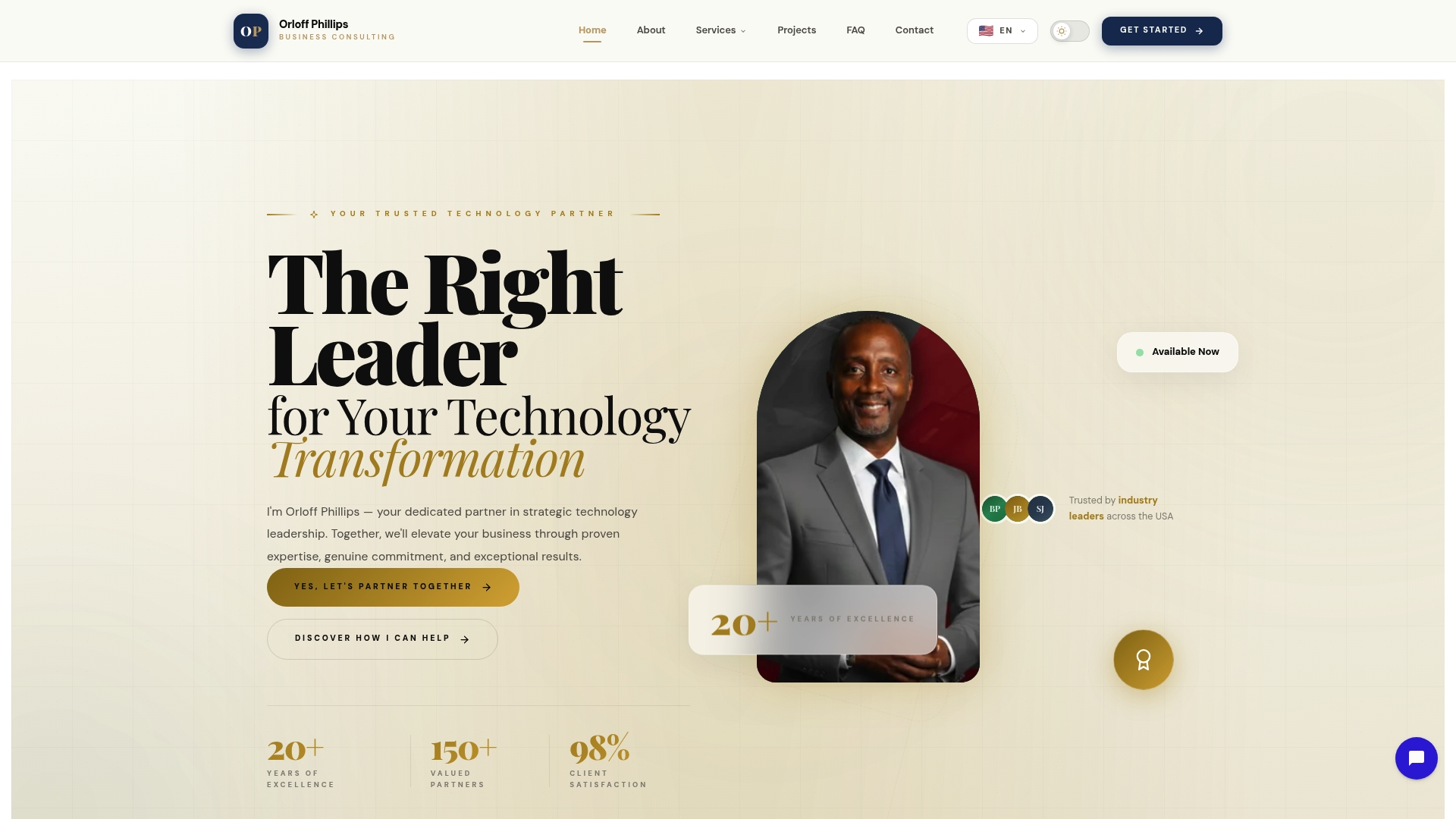
Orloffphillips works with mid-sized and large organizations across the United States to build exactly that. From strategic IT leadership to fractional CIO and CTO placements, the firm brings a proven process for matching the right executive to the right engagement. Business leaders can also access resources on technology leadership trends to understand how the fractional model fits within a broader growth strategy. If you are evaluating fractional talent or preparing to engage a fractional executive, Orloffphillips offers the frameworks and expertise to make that engagement succeed from day one. You can also find on-demand fractional experts through vetted networks built for growth-focused businesses.
FAQ
What are the most important skills for fractional executives?
The most critical fractional executive skills are strategic clarity, stakeholder influence, adaptability, and commercial awareness. AI fluency is now an additional baseline competency for 2026 engagements.
How do fractional executives build trust without formal authority?
Fractional leaders build trust by securing an early visible win, listening before prescribing, and communicating in the client’s language rather than consultant terminology.
What is scope discipline and why does it matter?
Scope discipline means declining work outside your defined mandate to protect focus and effectiveness. Fractional executives who drift beyond their core role dilute their impact and reduce measurable value for the client.
How does AI fluency apply to fractional executive roles?
AI fluency means knowing how to evaluate AI tools for a specific client context, identify where automation creates leverage, and maintain human-centered judgment where it matters most. It is now a core executive competency, not a technical specialty.
What is a one-page mandate and when should it be used?
A one-page mandate defines ownership, deliverables, and success criteria for a fractional engagement within 90 days. It should be written and agreed upon before the engagement begins to align expectations on both sides.

Leave a Reply