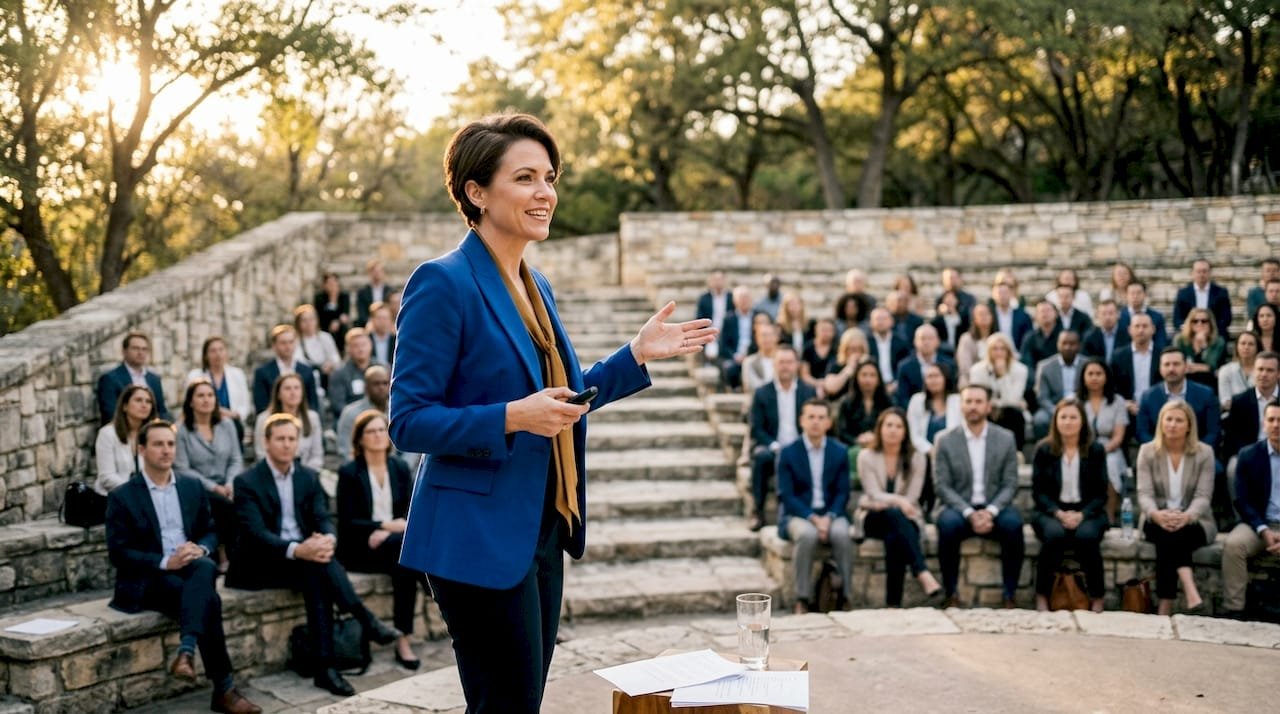
Keynote speaking in leadership is defined as the deliberate use of high-stakes public address to shape organizational direction, build executive credibility, and accelerate culture change. The role of keynote speaking in leadership extends well beyond motivation. It functions as a strategic communication tool that drives alignment and trust across entire organizations. Research confirms that effective leadership speaking directly correlates with improved employee engagement, performance, and culture. Orloffphillips works with executives who understand this connection and want to use it deliberately.
How does keynote speaking influence leadership effectiveness?
Executive presence is not a personality trait. It is a set of observable behaviors, and keynote speaking is one of the most direct ways to demonstrate it. Audiences evaluate confidence, authenticity, and authority within seconds of a speaker taking the stage. That rapid subconscious judgment shapes how teams perceive a leader’s credibility for weeks afterward.
Public speaking activates a feedback loop between the speaker and the audience. When a leader delivers a clear, well-structured message under pressure, the audience reads that as competence. When the message is vague or the delivery hesitant, trust erodes fast. This is why effective communication in leadership is now treated as a strategic skill, not a soft one.
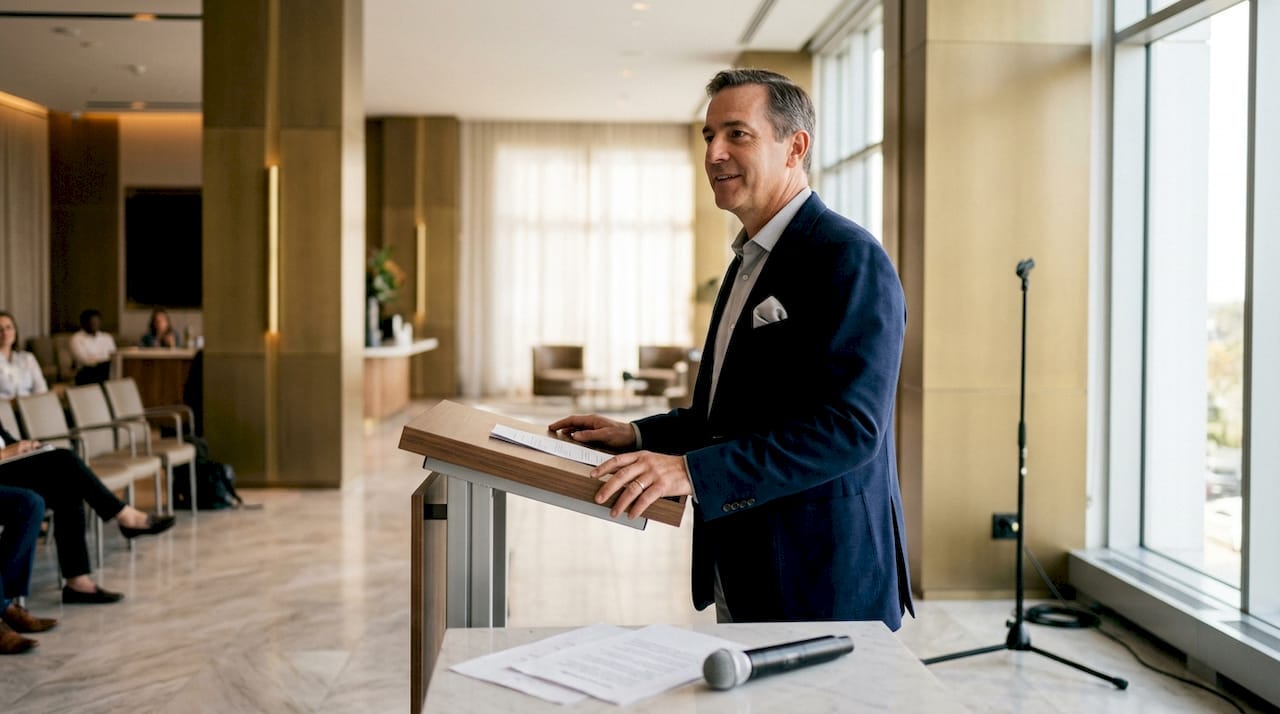
Keynote speaking also sharpens a leader’s ability to communicate under pressure. Preparing a keynote forces clarity. You cannot hide behind a committee report or a slide deck when you are the only person at the front of the room. That discipline carries directly into board meetings, investor calls, and crisis communications.
Pro Tip: Record every keynote you deliver, then review it without sound. Watch your body language, pacing, and stage presence. What you see is exactly what your audience experienced.
- Leaders who speak publicly with regularity report stronger team engagement and faster decision cycles.
- Keynote preparation builds message discipline that transfers to all leadership communication.
- Audiences distinguish between performed confidence and lived experience within the first few minutes.
- Speakers with practitioner backgrounds, such as former executives or consultants, carry measurably higher credibility in change management contexts.
What role do keynote speakers play in organizational change?
Keynote speakers act as external validators of internal strategy. When a CEO announces a cultural shift, teams often wait to see if it sticks. When a credible outside voice delivers the same message with evidence and narrative, the shift accelerates. Leadership keynotes serve as catalysts for alignment, giving teams shared language they carry into daily work long after the event ends.
The amplifying effect is measurable. 65% of organizations report that keynote messages are reinforced internally by leadership for 1–6 weeks after the event when the engagement is well integrated. That reinforcement window is where real culture change happens. A single keynote does not change behavior. Repeated references to its frameworks in meetings, communications, and decisions do.
External keynotes also outperform internal communications in one specific way: they carry no political baggage. An internal memo from the C-suite arrives with context, history, and skepticism. A well-chosen external speaker arrives with none of that. The message lands cleaner.
Pro Tip: Brief your keynote speaker on your organization’s specific language, current challenges, and strategic priorities at least two weeks before the event. Generic talks produce generic results.
| Impact Area | What the Research Shows |
|---|---|
| Message reinforcement | 65% of organizations reinforce keynote messages internally for 1–6 weeks post-event |
| ROI potential | Organizations report returns up to five times the speaker’s fee when keynotes align with audience needs |
| Culture alignment | Leaders aligned with speaker priorities report stronger shifts in culture metrics |
| Change management | Practitioners with lived experience produce higher reception and effectiveness |
| Post-event impact | Highest ROI occurs when speaker frameworks are referenced repeatedly in meetings |
What do modern CEOs expect from keynote speaking?
The expectations of executives have shifted sharply. CEOs now demand “substance-first” keynotes that deliver measurable outcomes, including improved decision-making and stronger cultural alignment. Entertainment value alone no longer justifies the investment. The KPIs executives track after a keynote include leadership consistency, communication under pressure, and retention of session content.
The role of executive leadership in 2026 has grown more complex. Hybrid teams, AI adoption, and market volatility have created communication gaps that keynotes are uniquely positioned to close. Executives want speakers who address these realities directly, not speakers who recycle frameworks from a decade ago.
Here is what the most effective keynote engagements deliver for executive audiences:
- Customization: The speaker references the organization’s actual challenges, not generic industry trends.
- Credibility: The speaker has operated at the executive level or navigated the specific challenge being discussed.
- Actionability: Attendees leave with frameworks they can apply in their next leadership conversation.
- Alignment: The keynote message connects directly to the organization’s stated strategy or transformation goals.
- Measurement: Success metrics are defined before the event, not after.
The selection process matters as much as the event itself. Executives who brief speakers thoroughly, align the keynote with a broader leadership initiative, and plan post-event reinforcement consistently report higher returns. Those who treat keynotes as standalone events rarely see lasting change.
How can leaders maximize the impact of keynote speaking?
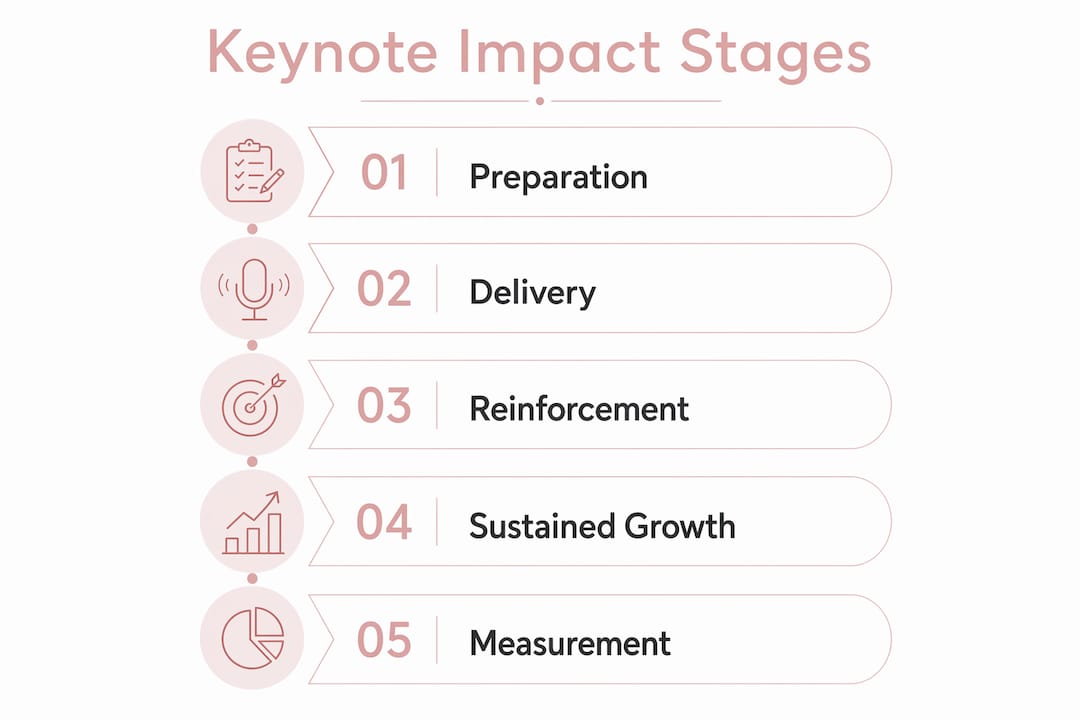
The highest-performing keynote engagements follow a deliberate process before, during, and after the event. Transformational keynotes prioritize cognitive, emotional, and behavioral engagement to produce durable change. Experiential and interactive formats running 60–90 minutes consistently outperform shorter, purely motivational talks.
- Define the outcome first. Decide what behavior or belief should change before you select a speaker. Work backward from that outcome to identify the right message and format.
- Vet for practitioner experience. Speakers with practitioner backgrounds carry greater credibility, especially when communicating difficult change. Ask for examples of how they have navigated the challenge they will speak about.
- Integrate, do not isolate. Place the keynote within a broader leadership initiative. A keynote that sits alone in the calendar produces a spike in motivation and nothing else.
- Create shared vocabulary. After the event, require leadership to reference the speaker’s frameworks in meetings and written communications. The highest ROI occurs when this shared vocabulary persists for weeks.
- Measure the 4–6 week window. Track leadership behavior change in the month following the event. Survey teams on message retention and observe whether the keynote’s language appears in day-to-day decisions.
- Use interactive formats. Peer discussion, live problem-solving, and Q&A segments increase retention and behavioral follow-through far more than passive listening.
Pro Tip: Avoid the “inspiration trap.” If your post-event survey only measures how energized people felt, you are measuring the wrong thing. Measure whether the frameworks appeared in the next leadership cycle.
Overcoming the fear of public speaking is also part of this equation for leaders who want to deliver keynotes themselves. Building confidence on stage is a learnable skill, and leaders who invest in it gain a communication advantage that compounds over time. Public speaking training is now central to leadership development because communication is how leaders unite teams and drive change, not just inform them.
Key Takeaways
Keynote speaking in leadership produces its highest impact when it is integrated into a broader strategy, reinforced by leadership language, and measured against behavioral outcomes, not just audience satisfaction.
| Point | Details |
|---|---|
| Keynotes build executive presence | Audiences evaluate a leader’s credibility within seconds, making delivery and substance equally critical. |
| Reinforcement drives ROI | 65% of organizations reinforce keynote messages for 1–6 weeks post-event, which is where culture change takes hold. |
| Substance over spectacle | CEOs now measure keynote success by leadership consistency, decision quality, and message retention. |
| Practitioner speakers outperform | Speakers with lived executive experience produce stronger reception and behavioral change in change management contexts. |
| Integration multiplies impact | Organizations report returns up to five times the speaker’s fee when keynotes align with strategy and are reinforced afterward. |
Why I think most organizations underuse keynote speaking
Most organizations treat keynote speaking as an event. They book a speaker, fill a room, collect feedback forms, and move on. That approach wastes most of the investment.
What I have seen work, consistently, is treating the keynote as a launch point for a communication campaign. The speaker’s frameworks become the language of the next leadership cycle. The message gets referenced in one-on-ones, embedded in team meetings, and woven into how the executive team talks about strategy. That is when a keynote stops being a moment and starts being a mechanism.
The other mistake I see is prioritizing name recognition over fit. A famous speaker who delivers a generic talk to your specific team produces less change than a less-known practitioner who has actually solved the problem your organization is facing. Credibility is contextual. Audiences know the difference, and they decide within the first few minutes whether to trust what they are hearing.
Executives who treat inclusive leadership strategies and keynote speaking as separate disciplines miss the compounding effect. When a keynote reinforces the same values your leadership development program is building, the message lands harder and sticks longer.
The leaders I respect most are the ones who invest in their own speaking ability as seriously as they invest in hiring external speakers. Both matter. One builds organizational culture. The other builds personal authority. You need both to lead effectively in 2026.
— Orloff
How Orloffphillips supports leadership communication and transformation
Keynote speaking creates the spark. Sustaining that momentum requires the right leadership infrastructure behind it.
Orloffphillips works with mid-sized to large organizations across the United States to build that infrastructure. From strategic IT leadership to business transformation planning, the firm’s fractional executive services help leadership teams embed the messages, frameworks, and behaviors that keynotes introduce. If your organization is navigating a technology shift, a cultural realignment, or a growth inflection point, Orloffphillips provides the experienced executive guidance to make that change stick well beyond the event itself.
FAQ
What is the role of keynote speaking in leadership?
Keynote speaking in leadership is a strategic communication tool that builds executive presence, aligns organizations around shared language, and accelerates culture change. It functions as both a personal credibility signal and an organizational alignment mechanism.
How does keynote speaking benefit organizational growth?
When keynote messages are reinforced by leadership in the weeks following an event, organizations see measurable shifts in culture metrics, decision quality, and team alignment. Returns of up to five times the speaker’s fee are reported when keynotes align with strategy and are followed up consistently.
What do CEOs look for in a leadership keynote?
CEOs increasingly prioritize substance over inspiration, seeking keynotes that deliver measurable outcomes such as improved decision-making, stronger cultural alignment, and practical frameworks their teams can apply immediately.
How long does keynote impact last in an organization?
The critical reinforcement window is 4–6 weeks post-event. Organizations that actively reference the speaker’s frameworks in meetings and communications during this period see the most durable behavioral change.
Should leaders develop their own keynote speaking skills?
Yes. Effective leadership speaking is now recognized as a core executive skill that directly correlates with employee engagement, trust, and organizational performance. Leaders who invest in their own public speaking ability build a communication advantage that strengthens every aspect of their leadership.

Leave a Reply