
Inclusive leadership strategies are deliberate actions leaders take to create teams where every person contributes, belongs, and performs. A 2026 study of 1,247 employees across 312 organizations found that inclusive leadership fully mediates the link between workforce diversity and innovation, belonging, and revenue growth. That finding reframes inclusion from a values exercise into a performance driver. The recognized industry term for this practice is inclusive leadership, a field grounded in Social Identity Theory and the Resource-Based View of organizational capability. Leaders who apply these strategies build cultures where diversity pays off in measurable results.
1. What are inclusive leadership strategies and why do they work?
Inclusive leadership strategies are structured, repeatable behaviors that leaders use to make every team member feel seen, heard, and valued. They work because they address the gap between having a diverse team and actually benefiting from that diversity. Without deliberate leader action, diversity alone does not produce innovation or belonging.
The empirical case is clear. The 2026 AJEAF study found beta values of .341 for innovation, .512 for belonging, and .298 for revenue growth, all at p<.001. Inclusive leadership was the mechanism that converted diversity into those outcomes. That means the leader’s daily behavior, not the composition of the team, is the deciding variable.

2. Operationalizing daily inclusive behaviors with the BELONG Method™
The BELONG Method™ converts inclusion from a concept into four daily leader behaviors: Noticed, Named, Known, and Needed. Each behavior targets a specific belonging need that employees carry into every meeting and interaction.
- Noticed means actively acknowledging a person’s presence and contribution in real time, not in a quarterly review.
- Named means explicitly crediting an individual’s idea by name, especially in group settings where credit often drifts to the loudest voice.
- Known means understanding what motivates each team member and connecting their work to something they care about.
- Needed means assigning mission-critical work to people who are often overlooked, signaling that their skills are genuinely required.
The BELONG Method™ reduces cortisol and improves engagement through active presence and explicit contribution recognition. That is a physiological argument for inclusion, not just a cultural one. When people feel needed, their brains shift from threat response to creative engagement.
Pro Tip: At the start of every team meeting, spend 60 seconds naming one specific contribution a team member made since the last meeting. This single habit activates the “Named” behavior and sets a recognition norm for the group.
3. How perspective-taking and bias interruption sharpen decision-making
Perspective-taking is the practice of deliberately adopting another person’s viewpoint before making a decision. Research by Galinsky and Moskowitz shows that perspective-taking protocols reduce bias-driven decision errors by 58%. That is not a marginal improvement. It changes who gets hired, promoted, and heard.
Three techniques make bias interruption practical in daily leadership:
- Sequential input: Ask each team member to share their view before group discussion begins. This prevents conformity bias, where early speakers anchor the room.
- Devil’s advocate rotation: Assign a different person each week to formally challenge the group’s dominant assumption. This distributes critical thinking and removes the social cost of disagreement.
- Pattern recognition training: Devine et al. (2012) demonstrated that targeted training reduces biased leadership behavior by 47% over 12 weeks. The training teaches leaders to spot their own recurring bias patterns before acting on them.
Admitting mistakes publicly is also a precision tool. When leaders acknowledge their own errors, team comfort sharing feedback increases by 4.2 times. That vulnerability loop creates the psychological safety that makes all other inclusive behaviors more effective.
Pro Tip: Keep a “bias log” for one month. After each major decision, write one sentence about which voices you weighted most and why. Patterns surface fast, and awareness is the first step toward changing them.
4. What organizational systems sustain inclusive leadership over time?
Individual behavior change fades without systems to reinforce it. The DRIFT Model provides a structural framework with five pillars: Diversify, Represent, Include, Fix Systems, and Transform. Each pillar addresses a different layer of organizational culture, from hiring pipelines to policy design to leadership accountability.
Measurement is the pillar most organizations skip. DEI training ROI requires baseline data, disaggregated demographic tracking, and evaluation over at least 6–12 months combined with leadership accountability. Without disaggregated data, you cannot see whether promotion rates differ by race, gender, or tenure. You are flying blind.
The metrics that matter most include:
- Promotion rates tracked by demographic group
- Retention rates segmented by team and manager
- Belonging survey scores measured quarterly
- 360-degree DEI feedback scores for each manager
- Time-to-promotion gaps across demographic cohorts
Managers are the linchpin for translating DEI training into cultural change through inclusive communication and equitable task assignments. DEI metrics fail as compliance exercises without manager accountability and 360-degree feedback tools measuring inclusive behaviors. The system only works when individual managers are held to specific, measurable standards.
Organizations that embed inclusive skills in daily practice see 3.7x sustainability of behavior change compared to standalone training programs. A one-day workshop does not change culture. A daily practice embedded in team rituals does.
5. Which strategies most strongly drive innovation, belonging, and growth?
Inclusive leadership skills do not add up linearly. They multiply. A meta-analysis of 167 studies found that inclusive leadership skills produce effect sizes ranging from r=0.35 to r=0.52 on engagement and retention, and that mastering all five core skills yields multiplicative benefits. Developing one skill helps. Developing all five changes the team’s operating system.
Psychological safety is the moderator that determines whether diversity produces innovation at all. The 2026 AJEAF study found an interaction effect of β=.173 (p=.004, ΔR²=.038), meaning psychological safety amplifies the diversity-innovation link when leaders actively build it. Without psychological safety, diverse teams underperform homogeneous ones because people self-censor.
Belonging is a business-critical system. Leaders must explicitly name and connect employee contributions to avoid disengagement of high-potential employees. When belonging scores rise, so do retention and innovation metrics. The two are not separate goals.
The practical priority order for leaders is clear: build psychological safety first, then operationalize the BELONG Method™ behaviors, then implement bias interruption techniques. Each layer reinforces the next. Leaders who try to skip to measurement without building safety first find their data reflects suppressed voices, not actual team sentiment.
For leaders building leadership development programs, integrating these evidence-based techniques into structured workshops produces faster behavior change than self-directed learning alone.
6. Embedding inclusion into broader leadership accountability
As of may 2026, 22% of organizations plan to increase DEI funding while 65% maintain current budgets. That means most organizations are not cutting inclusion programs, but they are also not scaling them. The opportunity for leaders who act decisively is significant.
Connecting inclusive leadership to strategic growth outcomes is the argument that moves budget conversations. When leaders can show that belonging scores correlate with retention, and retention correlates with revenue, inclusion stops being a cost center and becomes a growth lever. That framing changes how boards and executive teams prioritize it.
Emotional intelligence is the foundation that makes all inclusive leadership techniques work in practice. Leaders who develop EQ alongside strategy close the gap between knowing what to do and actually doing it under pressure. Technique without self-awareness produces performative inclusion, which teams recognize immediately and distrust.
Key Takeaways
Inclusive leadership strategies work because they convert workforce diversity into measurable outcomes through specific, repeatable leader behaviors backed by empirical research.
| Point | Details |
|---|---|
| Inclusion mediates diversity outcomes | Inclusive leadership, not diversity alone, drives innovation, belonging, and revenue growth. |
| BELONG Method™ drives daily belonging | Four behaviors (Noticed, Named, Known, Needed) make inclusion a daily practice, not a policy. |
| Bias interruption is measurable | Perspective-taking cuts bias-driven errors by 58%; pattern training reduces biased behavior by 47% over 12 weeks. |
| Systems sustain behavior change | Tracking disaggregated metrics and 360-degree DEI feedback over 6–12 months is required for lasting results. |
| Skills multiply, not just add | Mastering all core inclusive skills produces multiplicative gains in engagement and retention. |
What I’ve learned from watching leaders get this wrong
Most leaders treat inclusion as a posture rather than a practice. They attend a workshop, update their language, and assume the culture will follow. It does not. What I have seen consistently, working with leadership teams across industries, is that the gap between intention and impact is almost always a behavioral gap, not a values gap.
The leaders who actually shift their team culture do one thing differently. They make inclusion a daily operational habit, not a quarterly initiative. They use something like the BELONG Method™ not because it sounds good in a presentation, but because they track whether they are doing it. They notice when they have not named someone’s contribution in two weeks. They catch themselves defaulting to the same three voices in every meeting.
Measurement is where most organizations stall. Leaders resist tracking their own inclusive behaviors because the data is uncomfortable. But measuring business outcomes is the only way to know whether your intentions are producing results. The leaders I respect most are the ones who ask for their 360-degree DEI feedback scores and actually read them.
The other pattern I see is leaders waiting for organizational permission to act inclusively. They want a formal program, a budget, a mandate from HR. The research does not support that approach. Behavior change that sticks comes from embedding new habits into existing routines, not from waiting for the right conditions. Start with one meeting. Apply one BELONG Method™ behavior. Measure the response. Build from there.
— Orloff
How Orloffphillips supports leaders building inclusive teams
Leaders who want to move from intention to measurable impact need more than frameworks. They need a thought partner who has seen what works across organizations of different sizes and sectors.
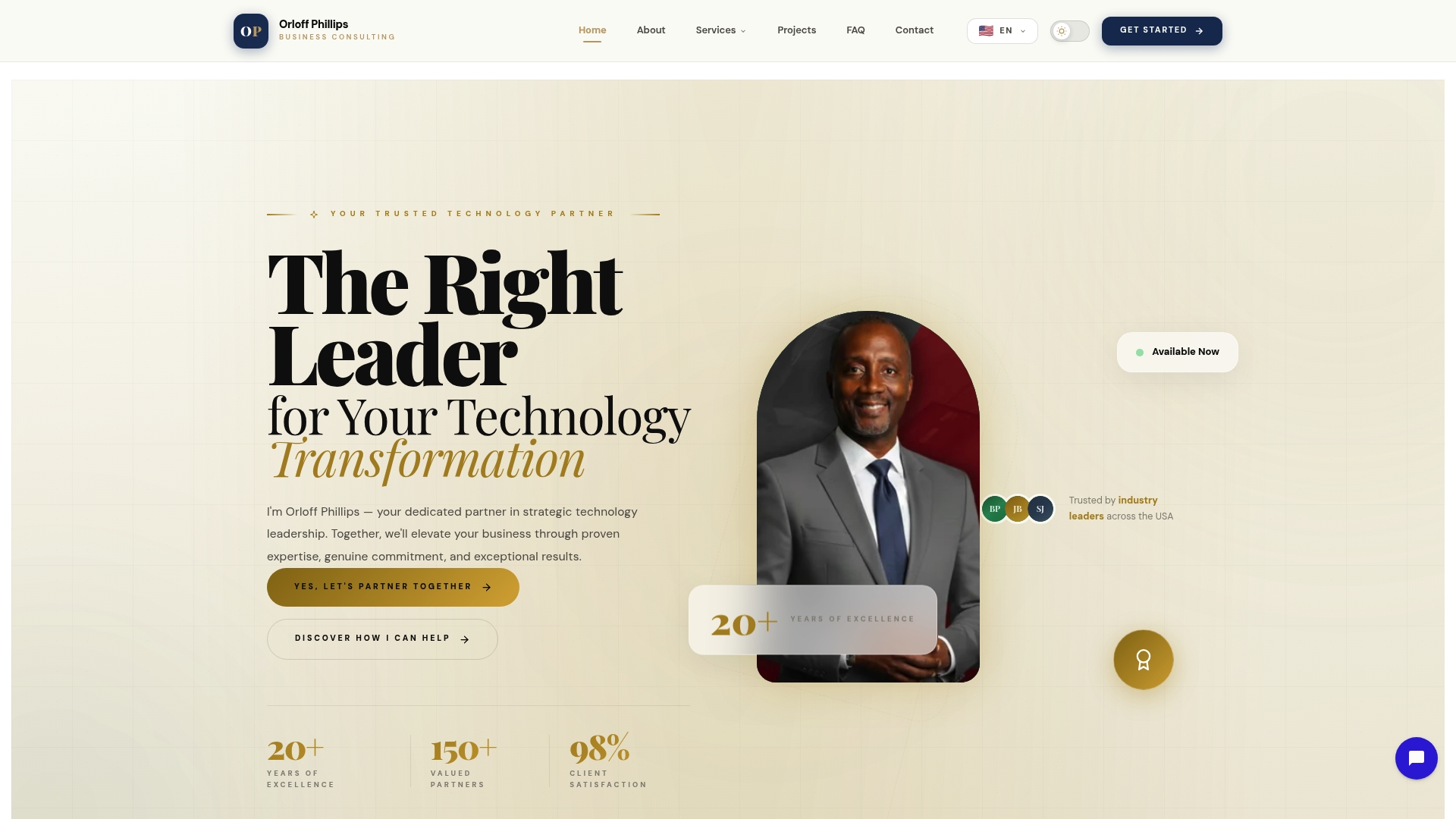
Orloffphillips works with leadership teams to build the accountability structures, measurement systems, and behavioral habits that make inclusion a performance driver rather than a compliance exercise. From strategic leadership consulting to leadership workshops grounded in current research, the work is always tied to outcomes you can measure. If you are ready to connect inclusive leadership to your organization’s growth strategy, Orloffphillips offers the experience and frameworks to get there.
FAQ
What are inclusive leadership strategies?
Inclusive leadership strategies are deliberate, repeatable behaviors leaders use to create belonging, reduce bias, and ensure every team member contributes fully. They are grounded in frameworks like the BELONG Method™ and supported by research linking them to innovation, retention, and revenue growth.
How does psychological safety connect to inclusive leadership?
Psychological safety moderates the relationship between diversity and innovation. A 2026 study found an interaction effect of β=.173 (p=.004), meaning teams with high psychological safety produce significantly more innovation from the same level of diversity.
How long does it take to see results from inclusive leadership practices?
DEI training ROI requires evaluation over at least 6–12 months, combined with disaggregated demographic tracking and leadership accountability. One-time training events do not produce sustainable behavior change.
What metrics should leaders track to measure inclusion?
Track promotion rates, retention rates, belonging survey scores, and 360-degree DEI feedback scores, all segmented by demographic group. Disaggregated data reveals gaps that aggregate numbers hide.
Can a single manager make a difference without organizational support?
Yes. Organizations that embed inclusive skills in daily leadership practice see 3.7x sustainability of behavior change compared to standalone programs. A manager who applies the BELONG Method™ behaviors consistently will shift team culture even without a formal organizational program.

Leave a Reply