
Corporate innovation is defined as the disciplined process of turning ideas into scalable value that sustains competitive advantage over time. The best corporate innovation tips share one trait: they treat innovation as a repeatable system, not a one-time event. The three horizons model, psychological safety frameworks, and defined leadership roles like Catalysts and Architects are the building blocks of that system. Leaders who apply these principles consistently outpace those who rely on inspiration alone.
1. What are the best corporate innovation tips for resource allocation?
The three horizons model divides your innovation portfolio into three distinct bets: core improvements, adjacent opportunities, and long-term transformative plays. Each horizon requires different funding, timelines, and success metrics. Treating all three with the same expectations kills the long-term bets before they mature.
Alphabet’s approach is the clearest real-world example. Alphabet funds Search as a core business with near-term revenue targets, Waymo as a decade-long autonomous vehicle bet, and DeepMind as foundational AI research with no short-term commercial pressure. Each receives ring-fenced resources so operational demands cannot cannibalize speculative work.
- Horizon 1 (core): Improve existing products and processes. Measure by revenue and efficiency gains.
- Horizon 2 (adjacent): Enter new markets or customer segments. Measure by growth rate and adoption.
- Horizon 3 (transformative): Fund speculative, high-risk bets. Measure by learning milestones, not profit.
Pro Tip: Set a formal budget split across all three horizons at the start of each fiscal year. Without a written allocation, Horizon 1 pressure will absorb Horizon 2 and 3 funding every time.
2. How to run effective innovation experiments

Short, focused experiments are the engine of disciplined innovation. Effective experiments run about four weeks, carry capped budgets, and target learning outcomes rather than immediate commercial success. This constraint forces clarity on what you are actually trying to find out.
Starting small also protects your brand. A failed experiment with a defined scope and a modest budget is a learning asset. A failed experiment with no boundaries becomes a reputational liability and a budget drain.
- Define the learning question first. Write one sentence describing what you need to know before you can proceed.
- Cap the budget before you start. Small initial budgets, such as those in the range of a few thousand dollars, force disciplined scoping and prove that testing is possible without major exposure.
- Set a four-week clock. Short cycles produce faster feedback and prevent scope creep.
- Measure learning, not revenue. Track whether your hypothesis was confirmed or disproved, not whether you made money.
- Document results formally. Write up findings in a shared format so the organization builds a track record of tested ideas.
Pro Tip: Build an innovation sandbox: a protected environment where experiments run under separate branding or a limited audience. This separates experimental work from your core product and shields your reputation during testing.
Innovation experiments must target learning outcomes with minimal brand exposure to overcome the compliance and reputational constraints that stop most corporate teams from testing at all.
3. How can leaders build a culture of psychological safety?
Psychological safety is the foundation of every high-performing innovation culture. Without it, employees hide ideas, avoid admitting ignorance, and refuse to challenge broken processes. Cross-functional collaboration collapses into silos.
The practical steps below build psychological safety at the team level, where it actually matters.
- Implement the “why” rule. Senior leaders must answer junior employees’ questions with a genuine explanation, not a directive. This flattens hierarchy and signals that curiosity is welcome.
- Separate innovation metrics from operational KPIs. Employees will not take creative risks if their performance review penalizes failed experiments.
- Protect dedicated innovation time. Assigning non-negotiable calendar slots for innovation work signals that it is a real priority, not a side project.
- Celebrate documented failures. When a team kills a project and shares what they learned, recognize that publicly. It teaches others that failure with rigor is valued.
- Encourage cross-functional conversations. Pair people from different departments on short projects. Diverse perspectives surface blind spots that homogeneous teams miss.
The “why” rule is particularly powerful because it works in both directions. Junior employees learn the reasoning behind decisions. Senior leaders learn what assumptions their teams are questioning. Both sides get smarter.
4. What leadership roles drive successful innovation?
Two distinct leadership roles define how innovation gets embedded in an organization: Catalysts and Architects. Catalysts spark momentum by seeding opportunities and connecting people who would not otherwise collaborate. Architects build the social and operational environments that make collaboration a habit rather than an exception.
“Architects master the art of letting go. They create the conditions for others to nurture selected innovation seeds, then step back and enable the work to grow without micromanaging the outcome.”
Most organizations have people who naturally behave as Catalysts. They are the ones who bring ideas from outside, make introductions, and generate energy around new directions. The Architect role is rarer and harder to develop. It requires leaders who are willing to build systems, share credit, and measure success by what their teams produce rather than what they personally control.
- Catalysts identify emerging opportunities, connect cross-functional teams, and maintain momentum through early-stage ambiguity.
- Architects design collaboration rituals, remove structural barriers, and build quick learning loops that keep teams moving.
- Both roles require the discipline to separate innovation work from daily operational demands.
Catalyst and Architect roles are the mechanism that turns innovation from an episodic event into a repeatable business discipline. Without both, innovation depends on individual heroics rather than organizational systems.
5. How to stop non-viable innovation projects before they drain resources
“Zombie projects” are the silent killers of innovation credibility. These are initiatives that have clearly failed their original hypothesis but continue consuming budget and attention because no one has formally ended them. Organizations that fail to kill these projects waste credibility and resources that could fund viable experiments.
The fix is procedural, not cultural. Define exit criteria before a project starts, not after it struggles.
- Write exit criteria at kickoff. Before any project launches, document the specific conditions under which it will be terminated. This removes emotion from the decision later.
- Schedule formal review gates. Build a 30-day or 60-day checkpoint into every project plan. At each gate, the team presents evidence against the original learning question.
- Terminate with documentation. When a project ends, publish a one-page summary of what was tested, what was learned, and what the organization will do differently. This converts failure into institutional knowledge.
- Reallocate resources immediately. Move budget and people to the next experiment within two weeks of termination. Speed of reallocation signals organizational health.
Pro Tip: Frame project termination as a graduation, not a failure. Teams that complete a full experiment cycle, including a clean ending, have demonstrated exactly the discipline your innovation program needs.
Intentionally killing projects also protects your brand. An experiment that ends cleanly with documented lessons is a sign of maturity. An experiment that drags on without direction signals poor governance to both employees and external partners. For a broader view of how consulting partnerships can support this kind of disciplined governance, the Orloffphillips resource library covers real-world examples.
6. How does strategic innovation differ from technology adoption?
Strategic innovation survives operational demands, compliance pressure, and misaligned incentives. Technology adoption does not. The difference is whether the organization has codified its decision patterns into systems that persist beyond any single leader or project.
Most companies adopt new technology reactively. A competitor launches a new tool, and the organization scrambles to match it. That is not innovation. That is imitation with a delay. True innovation strategies for businesses require leaders to ask what new value they can create, not what existing value they can copy faster.
The practical test is simple. Ask whether your innovation program would survive the departure of its current champion. If the answer is no, you have a person-dependent initiative, not a system. Technology strategy becomes truly strategic only when it is embedded in governance, budgets, and role definitions that outlast any individual.
7. How can you measure innovation progress without killing creativity?
Measuring innovation requires two separate scorecards: one for the process and one for the outcomes. Mixing them produces the wrong behavior. Teams start optimizing for metrics rather than learning.
Process metrics track whether the innovation system is functioning. They include the number of experiments completed, the speed of learning cycles, and the percentage of projects that reach a formal review gate. These metrics tell you whether the machine is running. Leadership KPIs for innovation leaders should include process health alongside financial results.
Outcome metrics track whether the innovation is producing value. They include revenue from new products, cost reductions from process improvements, and market share in new segments. These metrics tell you whether the machine is producing the right output. The key discipline is patience: outcome metrics for Horizon 3 bets may take years to show results. Holding long-term bets to short-term outcome metrics is the fastest way to kill them.
Key Takeaways
The most effective approach to corporate innovation is a structured system combining resource allocation across three horizons, disciplined experimentation, psychological safety, and defined leadership roles that make innovation repeatable.
| Point | Details |
|---|---|
| Allocate across three horizons | Ring-fence budgets for core, adjacent, and transformative work to prevent short-term pressure from killing long-term bets. |
| Run short, capped experiments | Four-week experiments with defined learning questions produce faster feedback and protect brand reputation. |
| Build psychological safety | Employees must feel safe to challenge norms and admit ignorance before cross-functional innovation can function. |
| Define Catalyst and Architect roles | Assign specific leaders to seed opportunities and build collaboration systems so innovation does not depend on individual heroics. |
| Kill zombie projects deliberately | Write exit criteria before projects start and terminate with documented lessons to preserve resources and credibility. |
What I’ve learned about making innovation stick
Innovation execution is harder than ideation. Every leader I have worked with can generate ideas. Very few have built the organizational discipline to execute them repeatedly under pressure.
The most common mistake is treating a successful innovation cycle as proof that the culture is set. Winning once is not enough. Culture develops through repeated, disciplined cycles under varying conditions, including budget cuts, leadership changes, and competitive pressure. The organizations that sustain innovation are the ones that run the process even when it is inconvenient.
The second mistake is underestimating the social environment. Technology and ideas matter far less than most leaders think. What actually determines whether innovation takes hold is whether people feel safe enough to share half-formed ideas, whether leaders protect time for non-operational work, and whether failure is genuinely treated as data rather than a career risk.
Balancing creativity with process is the hardest part of the job. Creative people often resist structure. But process is what increases the probability that a good idea actually reaches the market. My advice: make the process as light as possible, but make it non-negotiable.
— Orloff
How Orloffphillips supports corporate innovation leadership
Corporate leaders who want to move from isolated experiments to a repeatable innovation system need more than a framework. They need experienced advisors who have built these systems inside real organizations.
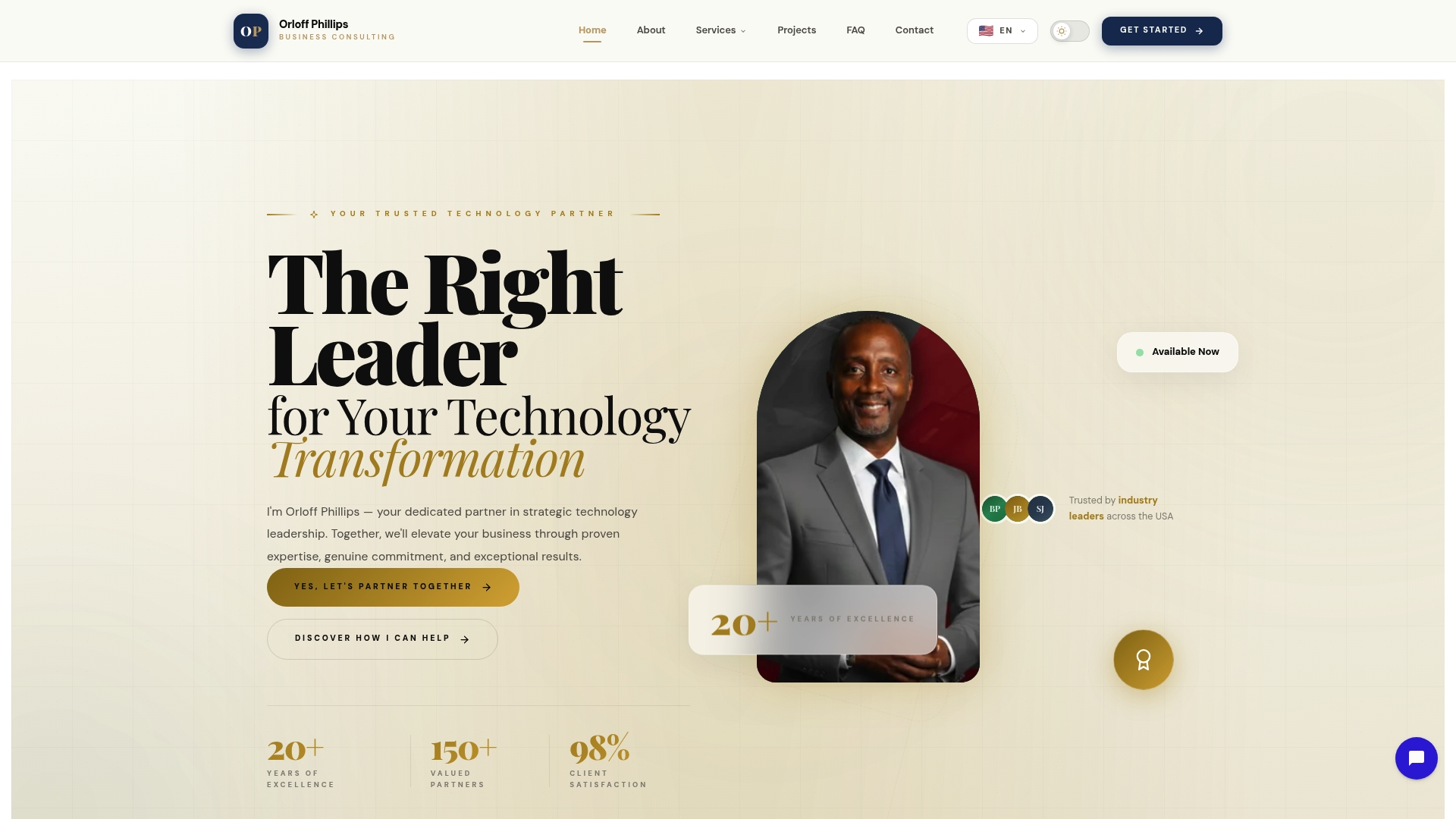
Orloffphillips works with mid-sized and large organizations across the United States to build the leadership infrastructure that makes innovation sustainable. From strategic IT leadership frameworks to fractional CTO and CIO engagements, the firm brings executive-level expertise without the full-time commitment. If your organization is ready to move from ideation to execution, Orloffphillips offers tailored advisory partnerships built around your specific growth goals. You can also explore digital innovation principles that connect technology strategy to business transformation outcomes.
FAQ
What is corporate innovation?
Corporate innovation is the process of turning new ideas into scalable value through disciplined execution, structured experimentation, and cultural systems that make creativity repeatable across the organization.
How do you foster innovation in a large organization?
Build psychological safety, assign Catalyst and Architect leadership roles, and protect dedicated innovation time as a non-negotiable calendar commitment rather than a discretionary activity.
What is the three horizons model?
The three horizons model divides innovation investment into core improvements, adjacent opportunities, and long-term transformative bets, each with separate budgets, timelines, and success metrics.
How long should an innovation experiment run?
Effective innovation experiments run approximately four weeks with a capped budget, focusing on a single learning question rather than immediate commercial results.
Why do innovation programs fail?
Most innovation programs fail because organizations do not kill non-viable projects quickly enough, do not protect time for innovation work, and measure creative initiatives against short-term operational KPIs that punish failure instead of rewarding learning.

Leave a Reply